Choosing the right vehicle for your group
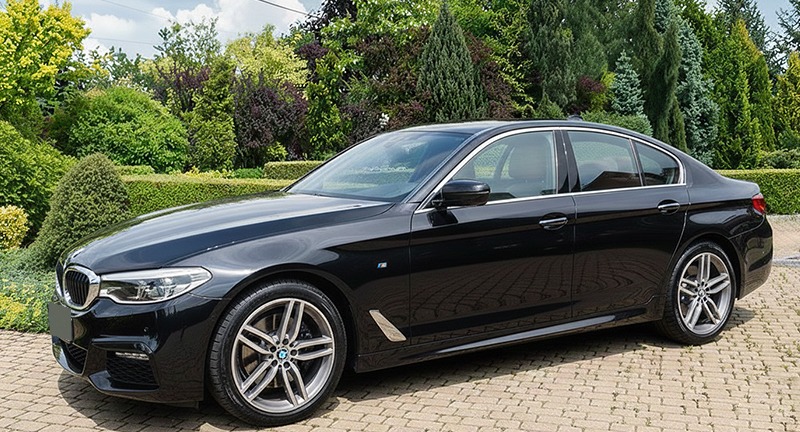
Partner operators supply everything from a chauffeur-driven saloon for two to an 80-seat double-decker coach. For most groups, though, the right answer is a minibus or a seven-seat van.
Minibus or seven-seat van?
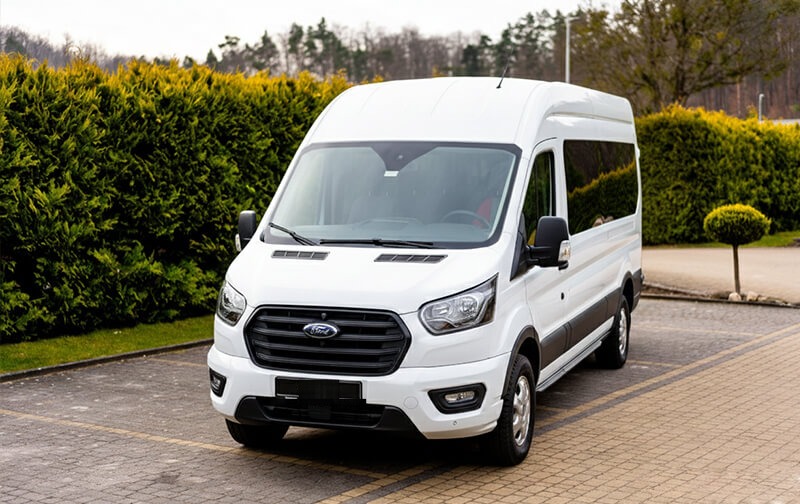
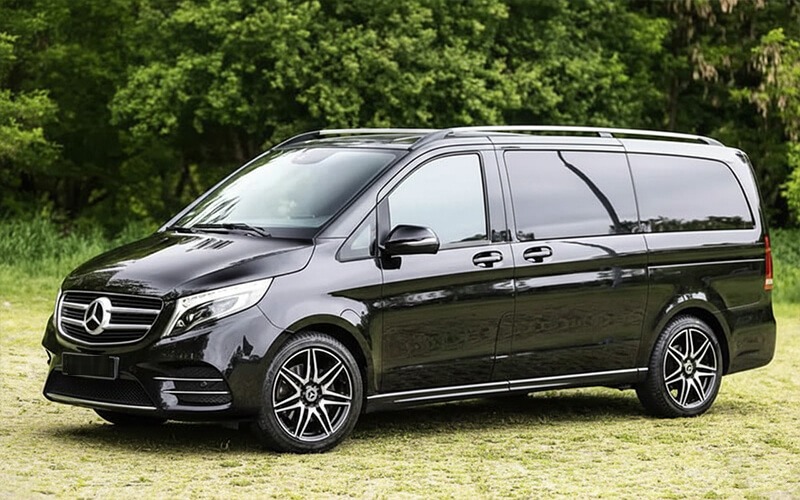
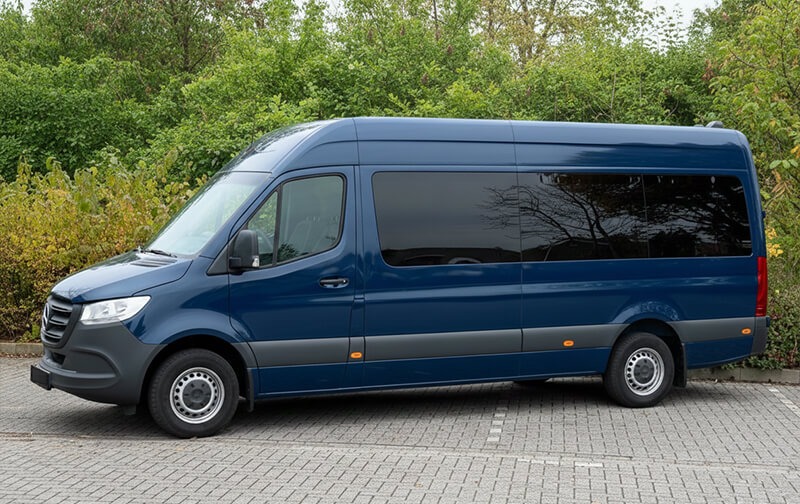
An executive van such as the Mercedes V-Class seats up to seven, but its luggage space shrinks with every seat row in use. A minibus carries roughly 16 to 19 passengers, with a rear luggage compartment of about 2 m³ on the Sprinter Travel 75. For seven people with long-trip suitcases, the minibus is often the more comfortable choice.
When a coach makes more sense
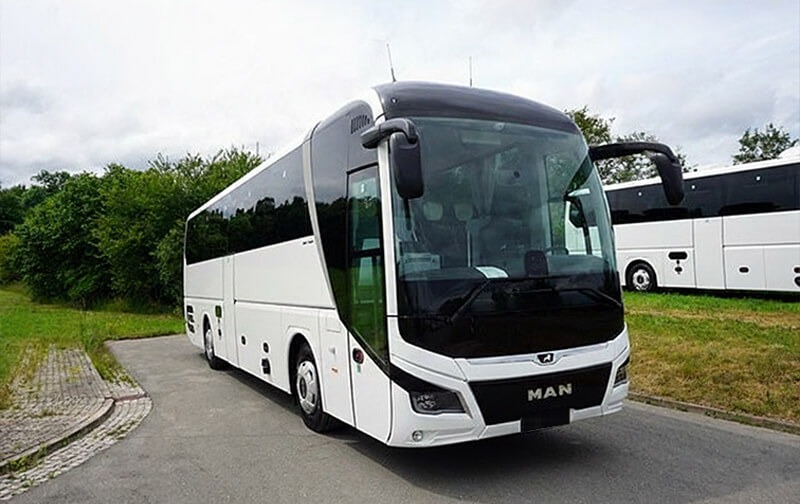
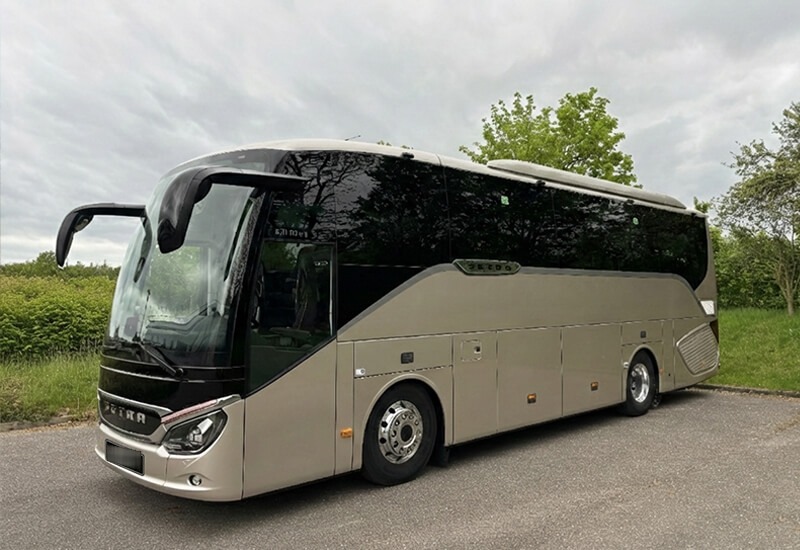
Around 30 passengers, a midi coach seating 29 to 35 is worth a look: shorter than a full coach and easier in historic centres. Full-size coaches carry 49 to 81 with underfloor luggage bays, the top end on double-deckers.
Your questions
Do passengers have to wear seat belts in a minibus?
Yes, wherever belts are fitted. EU rules apply the same obligation to minibuses and coaches.
Is there a wheelchair-accessible option?
Yes. Sprinter-based accessible minibuses come in layouts such as 10 seats plus one wheelchair space, though wheelchair spaces reduce luggage room.
Why does a minibus need a tachograph?
Any vehicle carrying more than nine people including the driver must have one, recording driving and rest times under EU rules.
Compare vehicle types
- Full-size coach — 49-81 seats
- Midi coach — 29-35 seats
- Minibus — 16-19 seats
- Executive van (Mercedes V-Class / Vito class) — 6-7 seats
- Executive car (E-Class sedan class) — 1-3 seats
- Wheelchair-accessible minibus — 10-16 plus wheelchair spaces
Not sure which size you need?
Tell us the headcount and the luggage, and we will suggest the vehicle that fits.
Request a quote or call +44 20 4652 9800